Lorem ipsum dolor sit amet, consectetur adipiscing elit.
Sed efficitur ex libero, eu lacinia metus malesuada at. Morbi a arcu vel ex ultricies maximus. Nulla facilisi. Duis non turpis sit amet mi consectetur fringilla eget ac diam.
Large-scale investors usually evaluate regions that hold one strong asset in isolation: a deep labor pool with no housing to support it, a research university with no network to move goods, low cost of living with nothing to keep a modern workforce in place.
Recent manufacturing projects elsewhere show the cost: training pipelines built after the fact, infrastructure strained past its planning assumptions.
Northwest Indiana was built the other way around. Workforce, livability, community, and connectivity were in place and coordinated here before any investor asked.
Welder
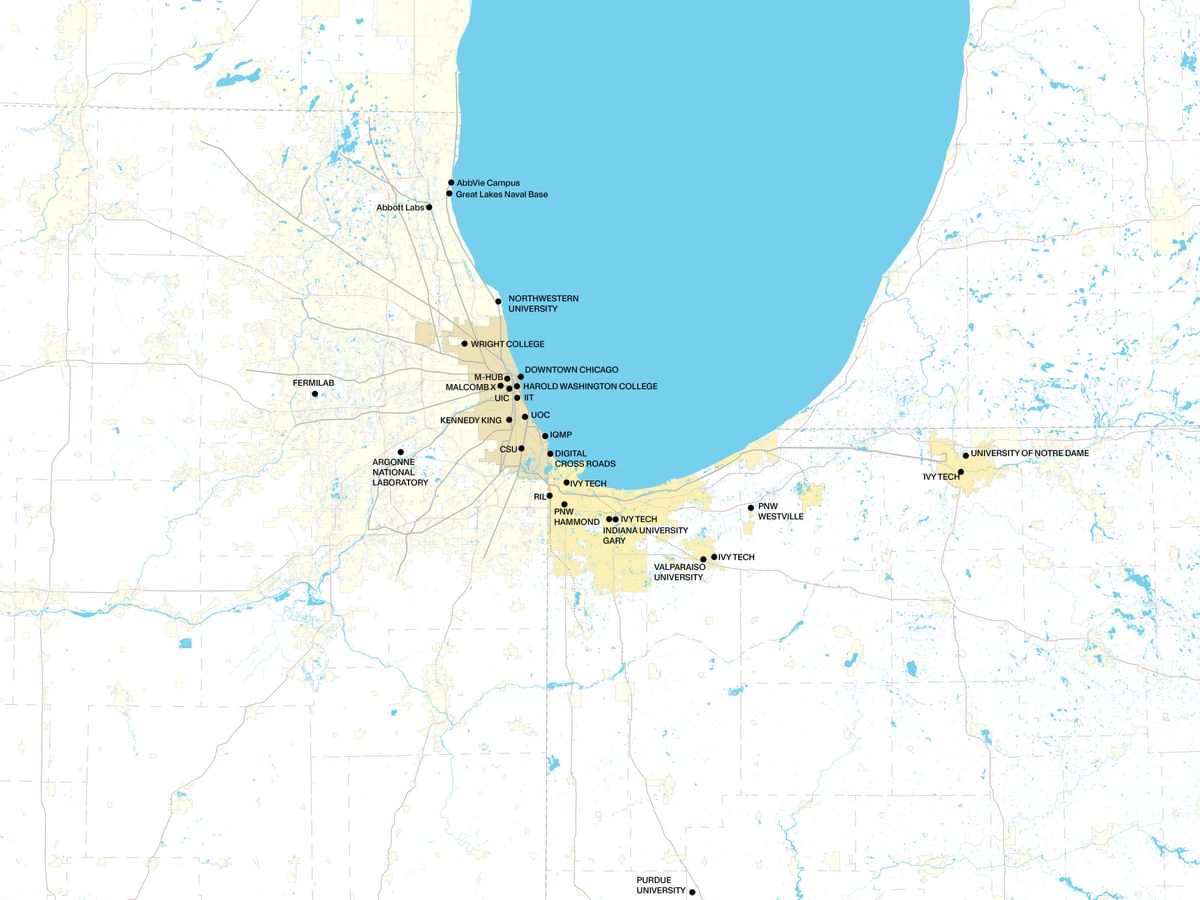
Northwest Indiana sits inside the Chicago combined statistical area, nineteen counties across Illinois, Indiana, and Wisconsin, home to close to ten million people and generating $958 billion a year. Thirty-five Fortune 500 companies are headquartered there.
An investment in the corridor is an investment inside one of the deepest and most diversified labor markets in North America. What separates Northwest Indiana within that canvas is a combination: available industrial land, a workforce forged over a century of heavy industry, a modern rail and highway network, and a quality of life anchored by Lake Michigan and a national park, all of it fifteen to twenty-five miles from downtown Chicago and woven into its economy.
Source: U.S. Census Bureau; U.S. Bureau of Economic Analysis, GDP by metropolitan area; World Business Chicago State of the Market, 2026.
Sed efficitur ex libero, eu lacinia metus malesuada at. Morbi a arcu vel ex ultricies maximus. Nulla facilisi. Duis non turpis sit amet mi consectetur fringilla eget ac diam.
U.S. Steel, Inland Steel, and Bethlehem Steel built one of the largest industrial corridors in the world along the shore of Lake Michigan, running around-the-clock operations on the same precision, discipline, and safety culture that cleanroom-grade production requires today.
That discipline outlasted the contraction of the steel industry. It passed down through three generations of workers who grew up inside shift schedules, quality systems, and heavy-PPE environments.
This culture did not disappear when steel contracted. It became the foundation for the region’s next chapter.
The numbers track the history. The corridor draws on a regional population of 726,000 across seven counties. More than 65,000 of them carry a precision industrial skill profile that transfers directly to advanced manufacturing, and 44,784 are active in the region’s manufacturing base today.
Man with Battery
Roughly 80% of advanced-manufacturing roles are technician and operator positions, and the people qualified to fill them already live here.
| Workers 45 and older | Displaced steel workers | Veterans |
|---|---|---|
| 120,000 in Indiana 300,000 across the Chicago metro | 65,000+ across the region’s manufacturing base | Clearance eligible today
for sensitive work |
| Decades of precision industrial experience | 3,300+ displaced from Cleveland-Cliffs in 2025 | Direct-transfer skills in electronics and precision mechanics |
| Lowest turnover of any demographic tracked in U.S. manufacturing studies | Fab-ready in 6 months via FastTrak | Highest retention in U.S. manufacturing |
Woman Working In Clean Room
Conventional site assessments count only the workers who are certified and job-ready today. This one maps and activates two tiers behind them, for a combined 150,000 to 200,000 investable workers.
Purdue University Northwest and Indiana University Northwest are on site. Ivy Tech, Valparaiso, and Chicago City Colleges sit within thirty minutes, and the University of Illinois, Purdue, and the University of Wisconsin-Madison within ninety. This infrastructure was built and tested before the first major investment arrived.
Lorem ipsum dolor sit amet, consectetur adipiscing elit. Praesent sit amet metus et felis blandit pretium.
An incentive package can close a wage gap and fund a training program. It cannot make somebody’s partner want to move.
The South Shore Corridor offers an unmatched collection of lifestyles inside a single sixty-minute shed, including a national park with fifteen miles of protected Lake Michigan shoreline, beach towns along the lakefront, walkable downtowns, established suburbs, working farmland, and a global city thirty minutes up the rail line. Cost of living runs about six percent below the national average across all of it.
Here, a relocating household chooses the perfect lifestyle instead of taking the one the job assigns.
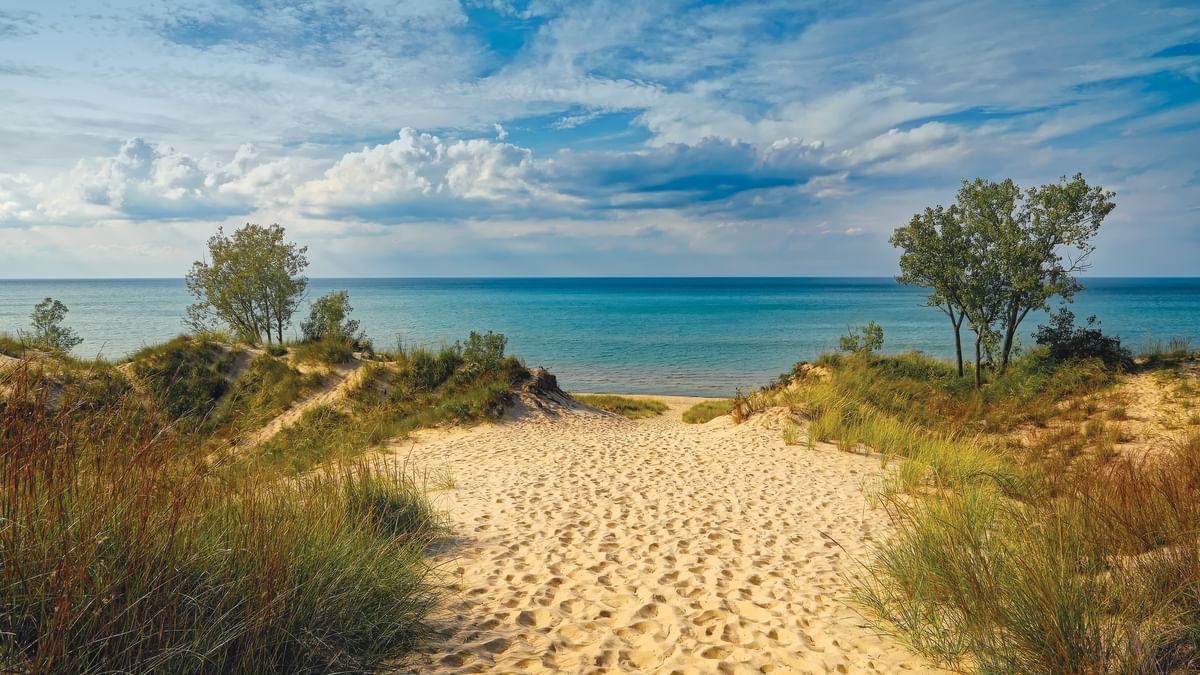
Indiana Dunes State Park
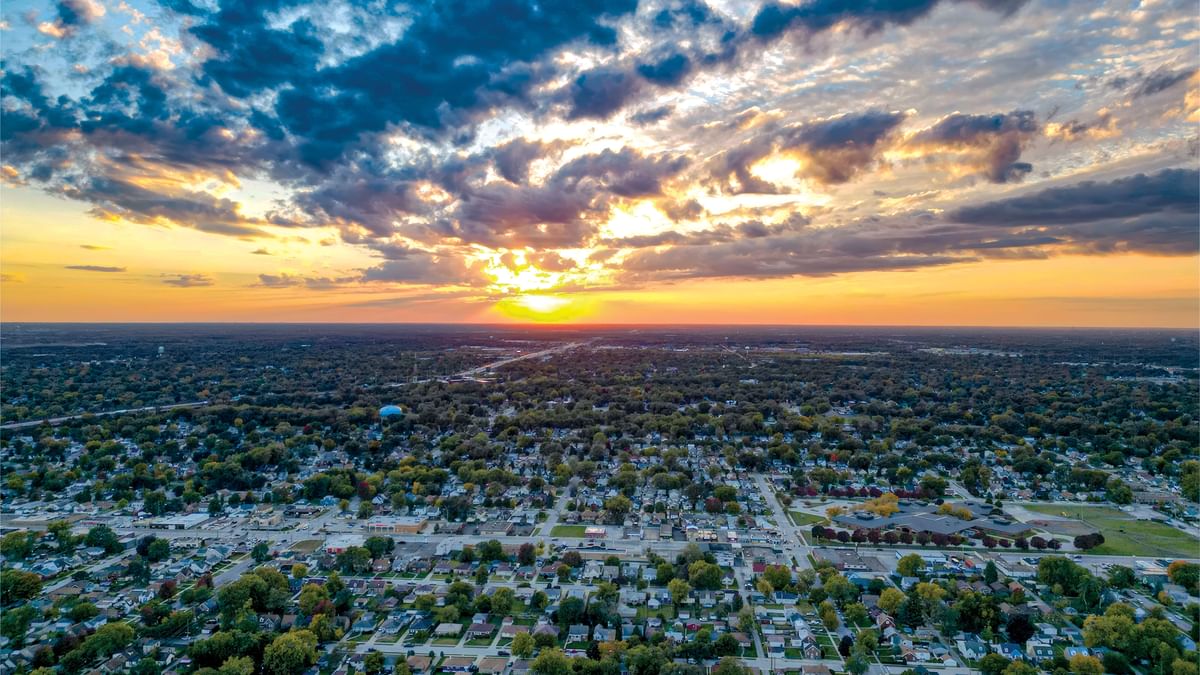
Hammond, Indiana
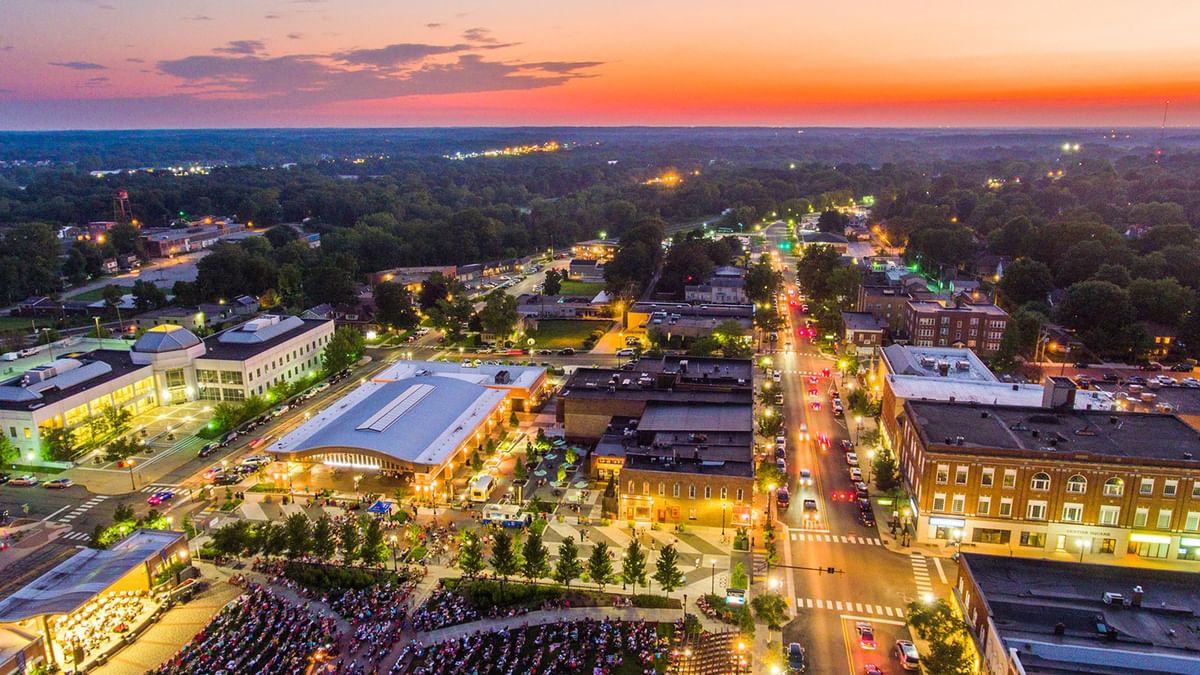
Valparaiso, Indiana
Northwest Indiana is a network of distinct communities connected by shared industrial roots and one regional economy. A large employer’s workforce, from line technicians to senior engineers, can find a genuinely different neighborhood fit within a twenty-minute radius of any single site.
Lake County anchors the industrial core and the largest population base, roughly 498,700 residents across Hammond, Gary, East Chicago, and Crown Point.
Porter County, home to Valparaiso and the Dunes, has been among the fastest-growing counties in the state and now approaches 175,000. Gary, Hammond, and East Chicago carry a multigenerational steelmaking identity with revitalization underway. Valparaiso, Crown Point, and Chesterton offer walkable downtowns and lower density inside the same commuting radius.
Indiana Dunes State Park
Hammond, Indiana
Valparaiso, Indiana
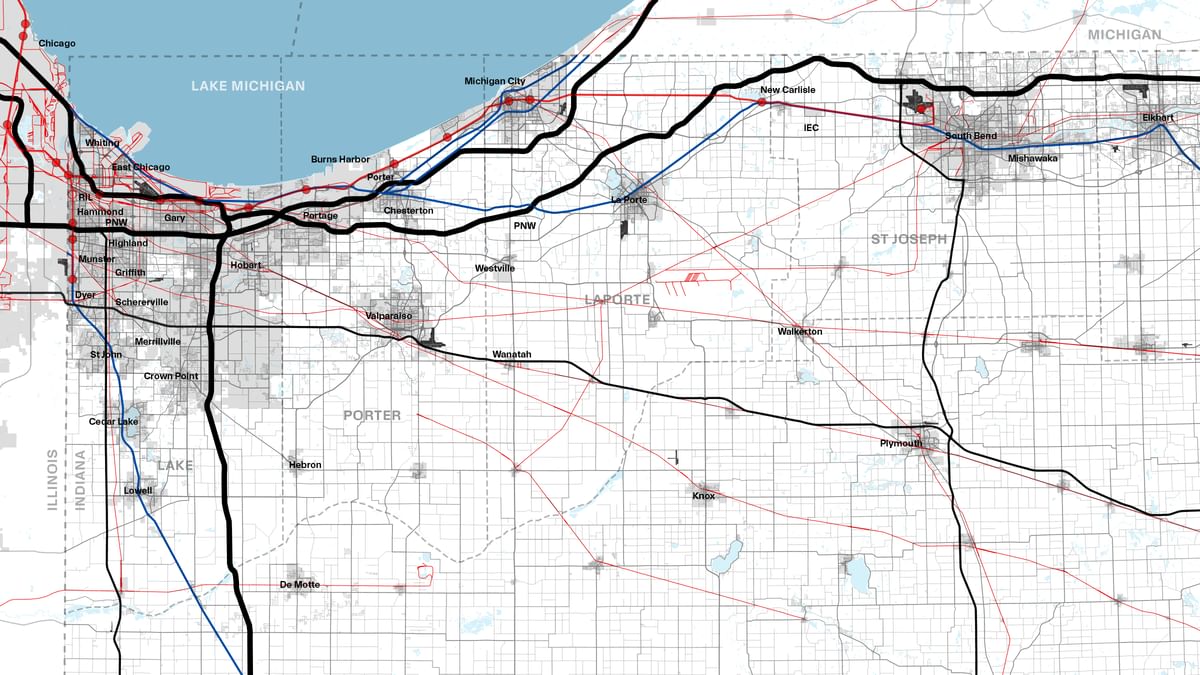
In March 2026 the South Shore Line completed its Double Track and West Lake Corridor expansion projects, on time and under budget, cutting travel time from key stations to Union Station to roughly thirty minutes. State officials project $2.7 billion in private investment and more than 6,000 new jobs by 2048, with nearly $800 million in development already underway.
That converts the metro labor shed from a commuting radius on paper into a thirty-minute one in practice. Interstates 80, 90, 94, and 65 converge in the Gary-Hammond area. O’Hare is a forty-five minute drive. Gary/Chicago International, twenty-five miles closer, has a Customs facility, a UPS cargo partnership, and a $67 million cargo expansion underway.
Placeholder text here to replace
Northwest Indiana’s workforce, education, quality-of-life, and connectivity systems are already operating, funded, and in most cases recently expanded.
Between 150,000 and 200,000 investable workers are organized across three readiness tiers, backed by a dedicated regional workforce orchestration function and more than $2.5 billion in accessible funding across more than twenty federal, state, and philanthropic programs. That includes $145 million in Department of Labor pay-for-performance funding and $19 million committed to advanced-manufacturing research.
A company evaluating the corridor does not have to assemble a workforce plan, a housing strategy, a transportation case, and a community-engagement approach from four different vendors and four different data sources. Those systems operate together under One Region, funded through the same pipeline.
Man Making Solar Panels
| What most sites offer | What Northwest Indiana offers |
|---|---|
| A strong labor pool, evaluated alone | 150,000–200,000 workers across three ready tiers |
| Training built after an employer commits | An eight-institution pipeline built before demand arrived |
| Affordability, without the amenities to retain talent | Chicago-scale wages at Indiana cost of living |
| Transportation treated as a single mode | Rail, road, and dual-airport access all in one corridor |
We look forward to helping investment partners and site selectors take the next step.
Join us in catalyzing the next century of American industry!
Reach out to learn more or to discuss potential opportunities.
Contact us at One Region
219-123-4567 or info@oneregionnwi.org